

Overview
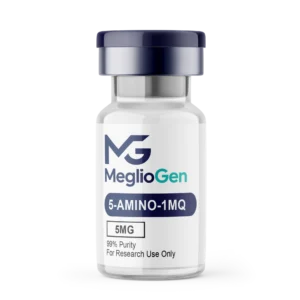
5‑Amino‑1MQ, also known as 5‑amino‑1‑methylquinolinium, is a synthetic small-molecule research compound investigated primarily as an inhibitor of nicotinamide N‑methyltransferase (NNMT). NNMT is an enzyme involved in nicotinamide metabolism, methyl-donor balance, and pathways associated with cellular NAD⁺ availability.
Current research involving 5‑Amino‑1MQ is limited to laboratory and preclinical settings. Investigators have evaluated the compound in biochemical assays, cultured cells, and animal models to examine NNMT activity, adipose-tissue metabolism, cellular energy regulation, skeletal-muscle biology, and metabolic responses under controlled experimental conditions.
Published preclinical research has reported changes in body composition, adipose-tissue activity, glucose regulation, and cellular NAD⁺-associated pathways in experimental animal models. These observations remain preclinical and cannot be interpreted as evidence of safety, efficacy, or therapeutic benefit in humans.
All available data regarding this compound are strictly limited to laboratory-based research. No claims are made regarding therapeutic applications, clinical efficacy, physiological outcomes, or suitability for human or veterinary use.
Biochemical Characteristics
5‑Amino‑1MQ is a synthetic quinolinium-derived small molecule designed for use in biochemical and preclinical NNMT research. It is structurally and functionally distinct from peptides, proteins, hormones, and conventional nutritional ingredients.
Its principal experimental target, nicotinamide N‑methyltransferase, catalyzes the transfer of a methyl group from S‑adenosyl‑L‑methionine to nicotinamide, producing 1‑methylnicotinamide and S‑adenosyl‑L‑homocysteine. Through this reaction, NNMT can influence nicotinamide availability, cellular methyl-donor balance, and metabolic pathways connected with NAD⁺ salvage.
Laboratory investigations may examine enzyme inhibition, target selectivity, concentration-dependent activity, membrane permeability, cellular uptake, metabolite formation, and downstream biochemical responses. Analytical characterization is necessary to confirm compound identity, purity, concentration, and material form.
- Molecular Class: Synthetic quinolinium small-molecule research compound
- Primary Research Target: Nicotinamide N‑methyltransferase — NNMT
- Common Name: 5‑Amino‑1MQ
- Chemical Name: 5‑amino‑1‑methylquinolinium
- PubChem CID: 950107
- Research Grade: High-purity research material
- Material Form: Refer to the product label and batch-specific Certificate of Analysis
- Quantity: Refer to the selected product configuration
- Intended Use: Laboratory research only
- Regulatory Status: Not approved as a drug, dietary supplement, food ingredient, or therapeutic product
Because salt form, counterion, hydration, and manufacturing specifications may affect reported molecular weight and composition, researchers should rely on the batch-specific Certificate of Analysis for definitive material information.
Research Applications
Within scientific and preclinical literature, 5‑Amino‑1MQ has been evaluated as an experimental NNMT inhibitor. Its use is limited to analytical investigation, in-vitro assays, cultured-cell systems, and controlled animal research.
Documented laboratory research contexts may include:
- NNMT enzyme-inhibition assays examining potency, kinetics, target engagement, and concentration-dependent activity.
- Nicotinamide metabolism research evaluating the relationship between NNMT activity, nicotinamide utilization, and the NAD⁺ salvage pathway.
- Methyl-donor balance studies examining biochemical relationships among NNMT, S‑adenosylmethionine, S‑adenosylhomocysteine, and cellular methylation potential.
- Adipocyte and adipose-tissue research investigating metabolic responses associated with altered NNMT activity under controlled experimental conditions.
- Preclinical metabolic-model research evaluating experimental changes in body composition, glucose tolerance, lipid-associated pathways, and energy expenditure in animal models.
- Skeletal-muscle investigations examining cellular regeneration, muscle stem-cell activity, and age-associated changes in experimental systems.
- Biomarker research involving measurement of 1‑methylnicotinamide as a downstream indicator of NNMT activity.
- Combination-model investigations examining NNMT inhibition alongside controlled dietary restriction, exercise, or other defined experimental interventions.
- Medicinal-chemistry studies comparing quinolinium-derived NNMT inhibitors with other inhibitor classes for selectivity, permeability, stability, and structure–activity relationships.
All referenced applications remain strictly confined to laboratory and non-clinical research. Experimental findings do not establish effectiveness, safety, dosage, or clinical utility in humans.
Pathway / Mechanistic Context
In experimental systems, 5‑Amino‑1MQ is studied primarily for its ability to inhibit nicotinamide N‑methyltransferase.
NNMT normally transfers a methyl group from S‑adenosyl‑L‑methionine to nicotinamide. This reaction produces 1‑methylnicotinamide and consumes nicotinamide that might otherwise participate in NAD⁺ salvage. NNMT activity may therefore influence both methyl-donor metabolism and cellular pathways related to NAD⁺ availability.
Preclinical researchers have investigated whether inhibiting NNMT can alter:
- Intracellular nicotinamide availability
- 1‑methylnicotinamide production
- NAD⁺-associated metabolic pathways
- S‑adenosylmethionine utilization
- Polyamine flux
- Adipocyte energy metabolism
- Lipogenic gene expression
- Cellular energy expenditure
- Skeletal-muscle regeneration pathways
These relationships are complex and may vary according to tissue type, experimental model, compound concentration, exposure duration, diet, age, and baseline NNMT expression.
Mechanistic observations involving cultured cells or laboratory animals cannot be assumed to occur in humans. Human pharmacokinetics, bioavailability, target engagement, long-term safety, and clinical outcomes have not been established.
Preclinical Research Summary
Preclinical studies have examined pharmacological NNMT inhibition in animal models of diet-induced metabolic dysfunction. A frequently referenced study reported that selective, membrane-permeable NNMT inhibitors—including 5‑Amino‑1MQ—produced changes in body weight and adiposity in diet-induced obese mice without a corresponding reduction in food intake. The researchers also reported changes in adipose NAD⁺ levels and expression of selected metabolic genes. PubMed study
A foundational genetic study evaluated NNMT knockdown in mouse adipose tissue and liver. Researchers reported altered energy expenditure, polyamine flux, NAD⁺ metabolism, and protection against diet-induced weight gain in that experimental model. This study investigated NNMT biology but did not constitute human evidence or establish clinical use of 5‑Amino‑1MQ. Nature study
Additional preclinical investigations have examined small-molecule NNMT inhibition in combination with calorie restriction, in aged skeletal-muscle models, and in experimental muscle-regeneration systems. Findings from these studies remain specific to their respective compounds, protocols, animal models, and laboratory conditions.
The available evidence does not establish:
- Safety or efficacy in humans
- An appropriate human dose
- Human oral bioavailability
- Short- or long-term adverse-effect profiles
- Drug-interaction profiles
- Suitability for weight management
- Suitability for metabolic or muscular conditions
- Therapeutic or preventive value
All documented observations remain confined to investigational, analytical, and preclinical research contexts.
Form & Analytical Testing
5‑Amino‑1MQ is supplied as a research-grade synthetic small-molecule material. The exact material form, salt form, counterion, concentration, excipients, and net quantity should be identified through the product label and batch-specific Certificate of Analysis.
Analytical characterization may include:
- High-Performance Liquid Chromatography — HPLC: Used to evaluate chromatographic purity and detect selected process-related impurities.
- Liquid Chromatography–Mass Spectrometry — LC‑MS: Used to support compound identity by evaluating mass-to-charge characteristics.
- Nuclear Magnetic Resonance — NMR: May be used to support structural identity and assess selected chemical characteristics.
- Water-content analysis: Used when moisture or hydration may affect the material’s calculated content.
- Residual-solvent testing: Used to evaluate selected solvents potentially remaining from synthesis or processing.
- Counterion or salt-form analysis: Used when necessary to establish the complete material composition.
- Microbial testing: Applicable when specified by the material format and intended laboratory protocol.
Researchers should consult the Certificate of Analysis associated with the individual batch rather than relying exclusively on generalized product specifications. Chromatographic purity alone does not establish sterility, potency, stability, or suitability for any particular experimental procedure.
Storage, handling, preparation, and disposal must follow the batch documentation, institutional laboratory procedures, and applicable chemical-safety standards.
Referenced Citations
- Neelakantan H, et al. (2018). Selective and membrane-permeable small molecule inhibitors of nicotinamide N-methyltransferase reverse high fat diet-induced obesity in mice. Biochemical Pharmacology. PubMed | DOI
- Kraus D, et al. (2014). Nicotinamide N-methyltransferase knockdown protects against diet-induced obesity. Nature. PubMed | DOI
- Neelakantan H, et al. (2019). Small molecule nicotinamide N-methyltransferase inhibitor activates senescent muscle stem cells and improves regenerative capacity of aged skeletal muscle. Biochemical Pharmacology. PubMed | DOI
- Sampson CM, et al. (2021). Combined nicotinamide N-methyltransferase inhibition and reduced-calorie diet normalizes body composition and enhances metabolic benefits in obese mice. Scientific Reports. PubMed | DOI
- Kannt A, et al. (2018). A small molecule inhibitor of nicotinamide N-methyltransferase for the treatment of metabolic disorders. Scientific Reports. PubMed | DOI
- Pissios P. (2017). Nicotinamide N-methyltransferase: More than a vitamin B3 clearance enzyme. Trends in Endocrinology & Metabolism. PubMed | DOI
- Babula JJ, et al. (2024). Nicotinamide N-methyltransferase inhibition mitigates obesity-related metabolic dysfunction. Diabetes, Obesity and Metabolism. PubMed | DOI
ALL ARTICLES AND PRODUCT INFORMATION PROVIDED ON THIS WEBSITE ARE FOR INFORMATIONAL, EDUCATIONAL, AND LABORATORY-RESEARCH PURPOSES ONLY. THEY ARE NOT INTENDED TO PROVIDE MEDICAL OR VETERINARY ADVICE.
RUO Disclaimer
All products offered on this website, including 5‑Amino‑1MQ, are intended strictly for laboratory, analytical, and scientific research purposes only.
5‑Amino‑1MQ is not a peptide and is not approved by the U.S. Food and Drug Administration for use as a drug, dietary supplement, food ingredient, cosmetic ingredient, or therapeutic product. It has not been evaluated or approved for diagnosing, treating, curing, mitigating, or preventing any disease or medical condition.
These materials have not been evaluated for human or veterinary safety. Human pharmacokinetics, bioavailability, dosing, adverse effects, interactions, reproductive toxicity, and long-term safety have not been established.
This product is not intended for:
- Human consumption
- Veterinary use
- Clinical investigation without applicable authorization
- Compounding
- Food or beverage preparation
- Cosmetic application
- Diagnostic procedures
- Therapeutic or preventive use
- Household use
For Laboratory Research Use Only (RUO). Not for human or veterinary use.
Reviews
There are no reviews yet.